Tuesday, May 08, 2007

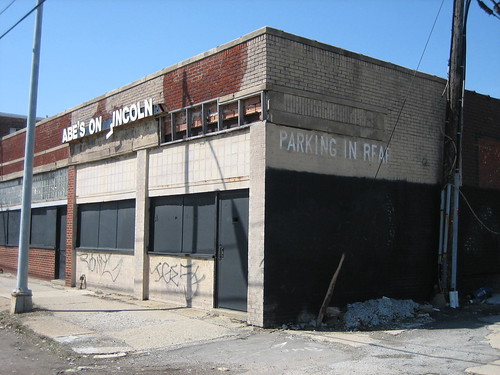
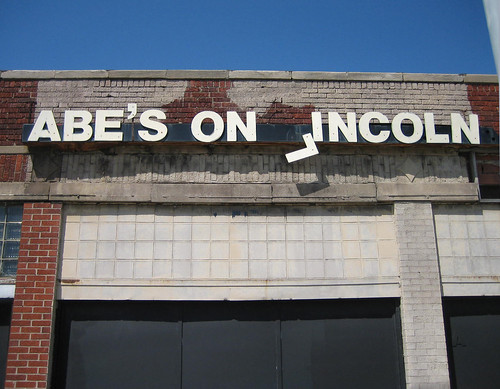
Abe's on Lincoln


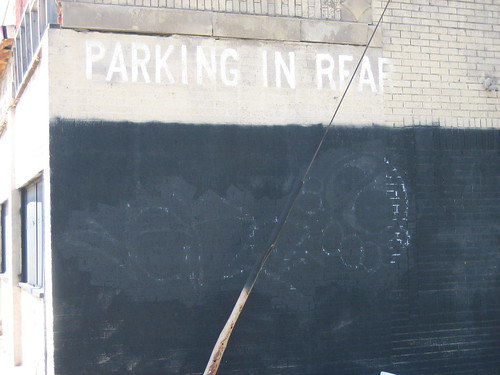
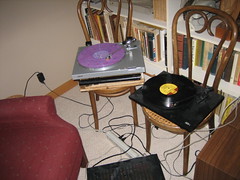
One of my favorite sights around town (the scrubbing-bubble looking thing) has been covered up at Abe's...


...but lives on elsewhere, like Eastern Market.

Labels: , ,

Wednesday, January 17, 2007

Monroe Block Erasure

In 1852, Hiram R. Johnson began to finance the construction of a rather ambitious block of commercial buildings in downtown Detroit. People associated the "Johnson Block" more with the street it was on and eventually it became known as the "Monroe Block." Monroe extended eastward from Woodward's Campus Martius. Theaters, clothiers, hatters, hotels, restaurants, dentists, clothing makers, loan sharks and pawn shops were just some of the things operating on the street at one time or another. Hotels dominated the early decades and theaters were the rage later on, making it part of a theater district. The National Theater (built in 1913 on the next block and visible in some of the pictures below) remains abandoned but intact on the next block to the east, the only remaining testament to its theater district era. Through neglect, hatred, incompetence and other failures of society, much of the original Monroe block was beyond repair by 1990, when it was demolished. It was the last intact antebellum (pre-civil war) block of commercial buildings in Detroit.

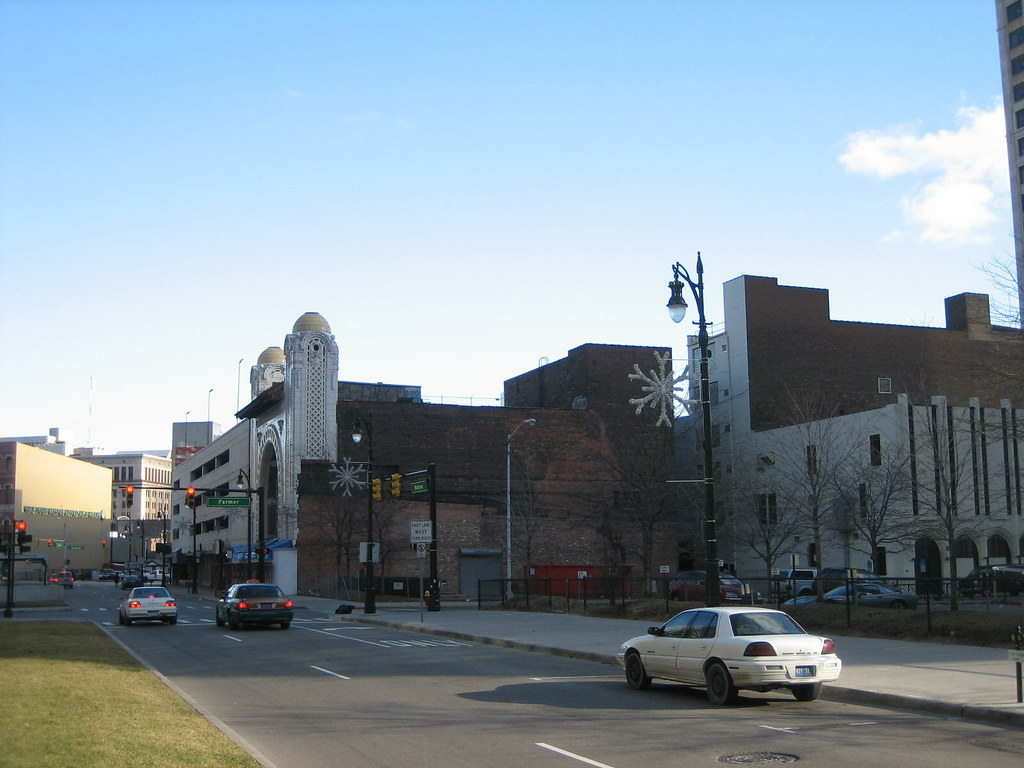
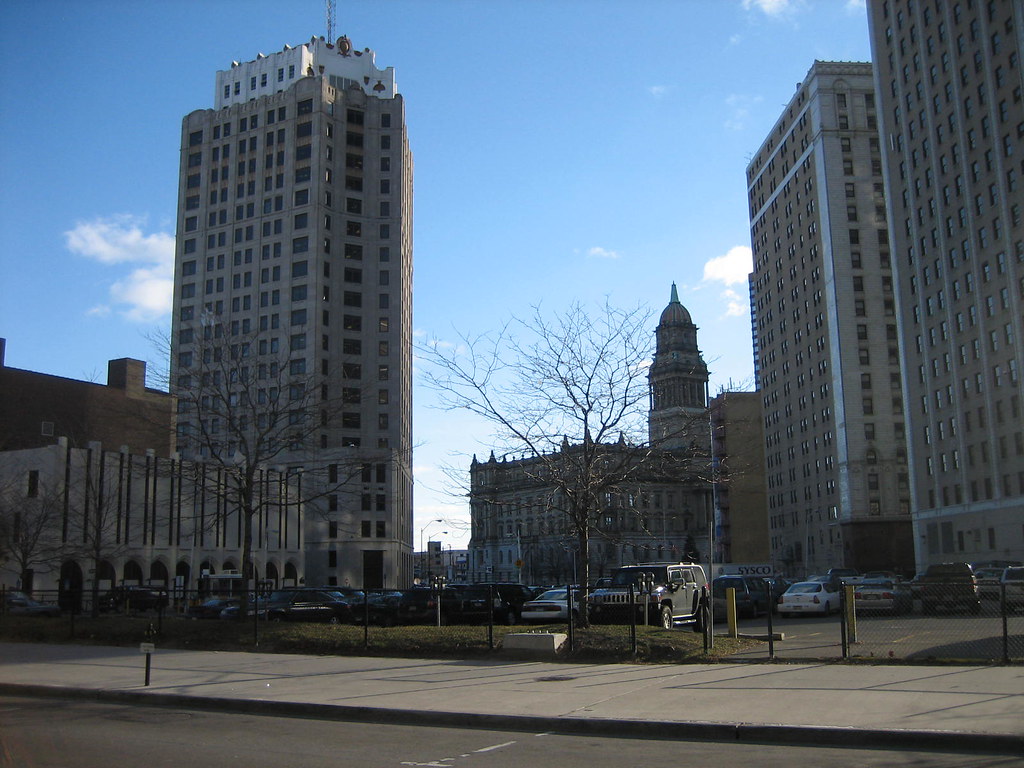
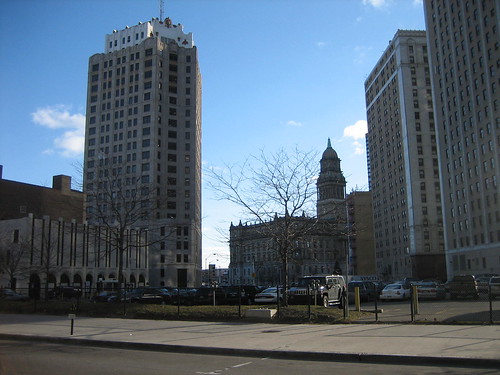
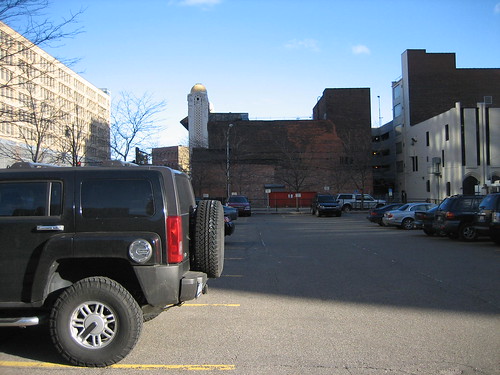
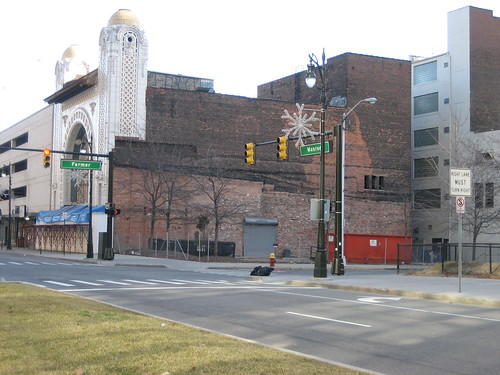
For those not familiar with the oil-slicked parking lot now sitting where the "Monroe Block" once stood, here are some pictures:
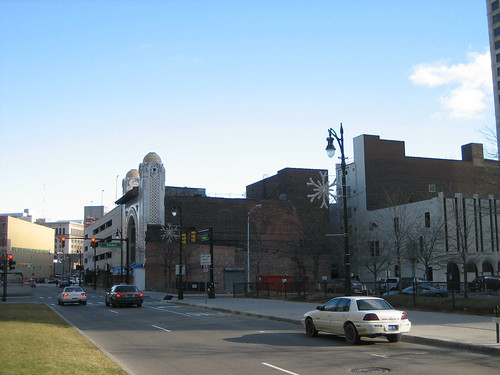

The National Theater (1914) still sits at the beginning of the next block.


The Library of Congress has these amazing pictures of the now-erased Monroe Block to offer from throughout the 20th century:

1908
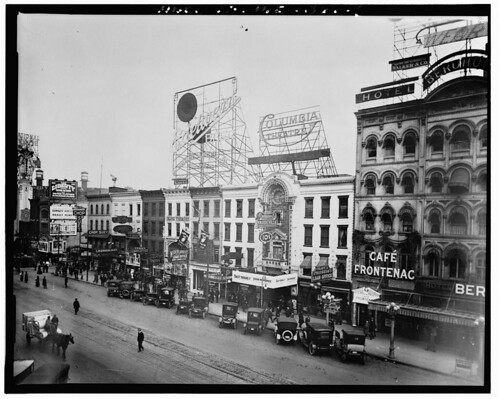

1913
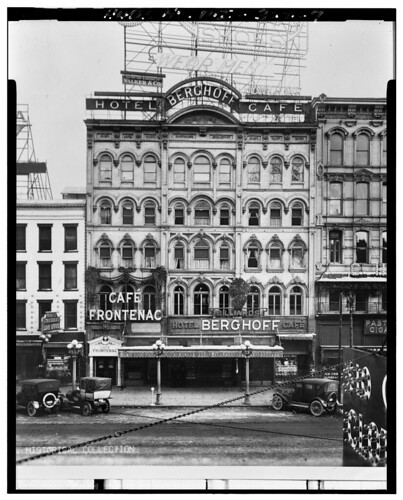

1915
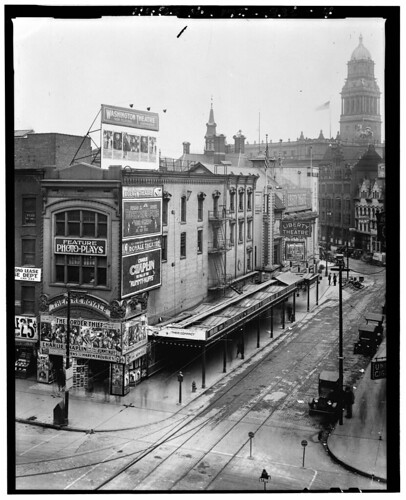

1917
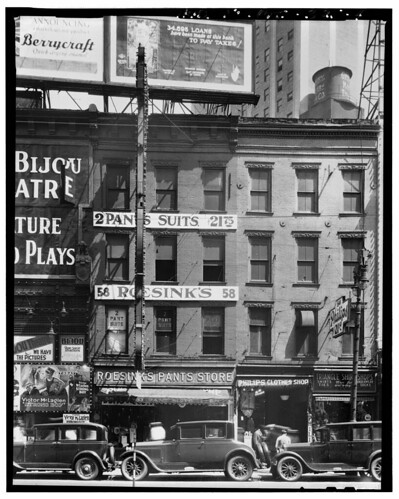

1929. Note that black and white people are photographed together.
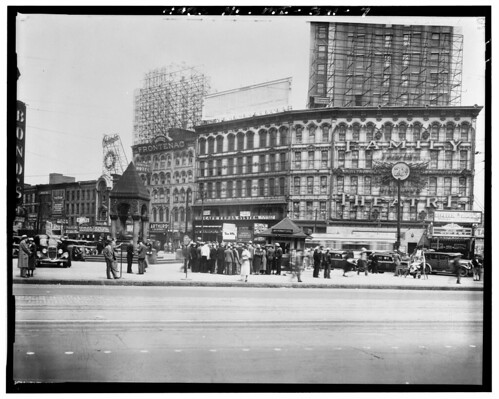

1933
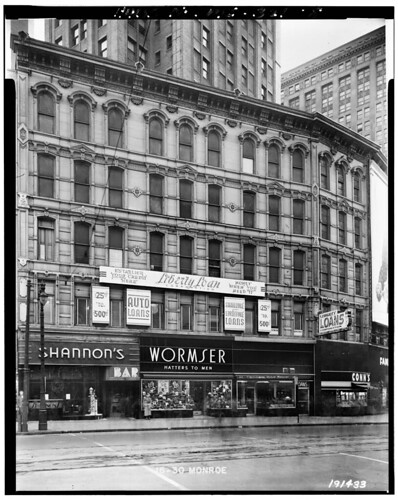

1951
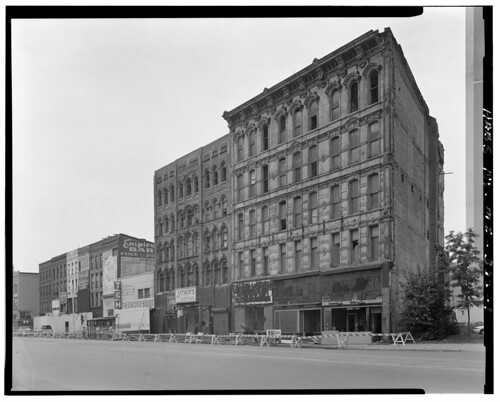

1982.
Property neglect was in full swing by the time of the above photo. The rear corner of the building is visibly caving in. "Vagrants" or "thugs" are often blamed for much of the damage these buildings suffered. However, people only took what little was valuable from these buildings when sporadic, half-assed attempts by landowners at securing these buildings failed. Structures weren't being ripped apart for materials as commonly as has been the case more recently. Others label property-owners as the culprits. The proprietors of businesses in these buildings certainly did witness some of the deterioration, but often times those people were distinct from the building owners, who seem to be owed the most blame for the neglect, including the city's stewardship of the block after they acquired the buildings in the mid-1970s.

Preservation efforts were underway for roughly the same 15 years that the city owned the property and are cited as insufficient to save the block from destruction in this phenomenally researched article.
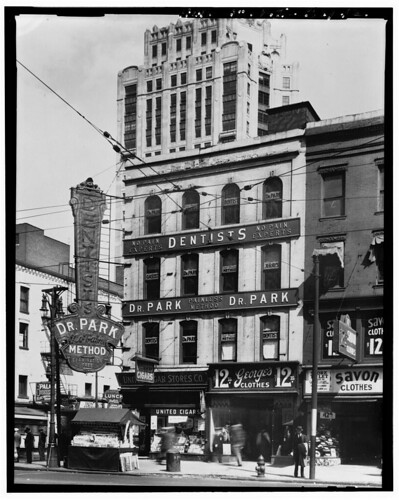

1930

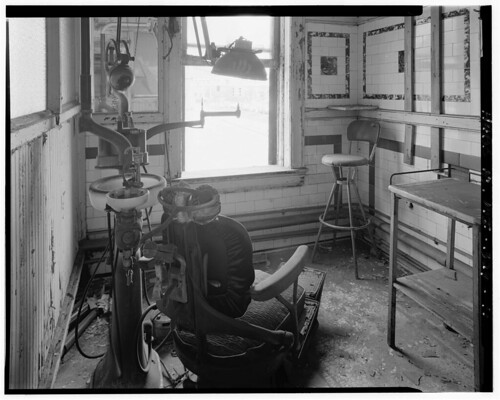
The dentist's office was open from 1921 to 1978. "Dr. Park's Painless Method Dentists" practiced here over the tumultuous 1929-1932 period. In 1933, Dr. William Zieve began practicing there until he vacated the building in 1978. Inside the Dentist's office in 1982:

So, here again we have today's "Monroe Block." A simple, ground-level parking lot. The National Theater awaits it's death row appeal in the background. Some people ask me, "Why not make the National Theater a stage for the Hard Rock to have concerts?" The Marxist in me usually answers something about capitalism and "All that is solid melts into air," but I still hold out hope that some asshole with money (perhaps this SUV's owner) will realize the potential of that weird old theater over there.


Next Post
Previous Post

Labels: , , , ,

Friday, December 08, 2006

Coverups

Detroit erases its physical history. Europeans arrived in 1701, but the oldest surviving home dates circa 1840. Only vague traces of Native presence remain, like the burial mound that still sits inside Fort Wayne. Much of the Detroit's 18th century buildings were erased in a great fire in 1805. Very little of the rebuilt Detroit from the early 19th century remains. Antebellum Detroit was erased and replaced (the Monroe Block is a notable example). The architecture that can still be found abundantly in the older parts of the city doesn't begin to get built until after the Civil War.

We're still erasing, of course. While a lot remains, the majority of what was built between the Civil War and Great Depression in Detroit has been erased. Dramatic and idiotic "refurbishments" of theaters and other buildings in the decades after World War II erased much of the previous eras grandeur and replaced with colder, simpler designs.

Sometimes, entire neighborhoods get erased. Paradise Valley had the highest concentration of African American owned businesses anywhere outside of Harlem in the 1940s. It was erased by the venom and misguidance of politicians and planners. In the late 1990s, construction of the Detroit Lion's football stadium bulldozed the only remaining night club (The 606 Horseshoe Bar) of the neighborhood.

Paint can erase a lot of history. Century old advertisements have clung to the tops of buildings before finally being covered over. Murals have come and gone. Statements are made and then replaced with other statements. The billboard at the SW corner of Michigan and Trumbull was purchased this past election season by the challenger for Governor, DeVos. The retort simply painted over the "os" to spell "DeVil for Governor", and changed his hackeneyed "vote for change" mantra to "vote for satan". The DeVos people quickly and sometimes not so quickly changed the message back. The editors repeated their efforts on their other local billboards...


Next Post
Previous Post

Labels: , , ,

Tuesday, September 26, 2006

"Historic Dismantling" of Tiger Stadium on Hold

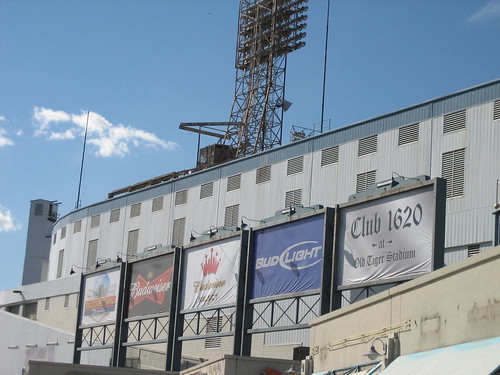
News from Mayor Kilpatrick's office: that the "historic dismantling" of Tiger Stadium is going more slowly than originally planned. Originally scheduled for demolition this month, developers are now being asked to submit proposals "in a few months." The Mayor attributes the delay to a number of factors, including that the building will be "historically dismantled" and not "demolished" and that he believes the city can sell off artifacts to help pay for the semi-erasure (promises to save parts of the main entrance and the field have been made). This is why Detroit News' price tag for the job today of $2-5 million was lower than the original $3-6 million. They think they can fetch a million dollars for memorabilia left rotting for 7 years.

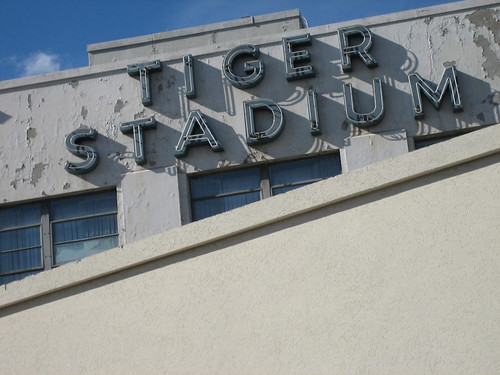
The famous neon lights

Will this landmark actually come down in the coming months or will it fall into the limbo that continues for the Michigan Central Station? Should these buildings be rehabilitated or scrapped? If the buildings should not be rehabilitated, what should replace them? Should the owners of these properties be held accountable for the obstructions to city planning that these limbo-state buildings create? (The city owns Tiger Stadium and the owners of the Ambassador Bridge own the train depot.) Should the city and private landowners be forced to restore or destroy, so that the city can move forward?

In Ann Arbor on Wednesday, two free and open to the public events will discuss the Tiger Stadium site:

4 :00 to 5:30pm Panel discussion in Angell Hall Auditorium C with Preservation Advocates:
Peter Comstock Riley, Founder of Michigan and Trumbull, LLC Isaac David, Preservationist and Architectural Historian

6:30 to 8:00pm Film screening in Angell Hall Auditorium D "Stranded at the Corner: The Battle to Save Historic Tiger Stadium"


Labels: , , , , ,